Emergency lighting is a critical life-safety system designed to provide illumination automatically when normal lighting fails, allowing building occupants to exit safely and enabling essential tasks to be completed during an emergency. In commercial, industrial, and multi-occupancy buildings, emergency lighting plays a vital role in preventing panic, reducing injury risk, and supporting safe evacuation procedures.
In the UK, emergency lighting systems are a legal requirement under the Regulatory Reform (Fire Safety) Order 2005 and must be designed, installed, and maintained in accordance with BS 5266-1. Failure to provide compliant emergency lighting can place occupants at risk and expose building owners and responsible persons to enforcement action.
Brunel Security provides complete emergency lighting solutions, from system design and installation through to ongoing maintenance and compliance testing. As an NSI Gold accredited provider, we deliver practical, reliable systems tailored to the layout, occupancy, and risk profile of your premises – ensuring compliance and long-term peace of mind.
Understanding Emergency Lighting Regulations in the UK
Emergency lighting requirements in the UK are defined by legislation and supporting standards designed to ensure buildings remain safe during power failures or emergency situations.
The Legal Framework: Regulatory Reform (Fire Safety) Order 2005
Under the Regulatory Reform (Fire Safety) Order 2005, the designated “Responsible Person” must ensure that adequate emergency routes and exits are provided and that these can be safely used at all times. This includes maintaining sufficient lighting levels should normal lighting fail.
Emergency lighting is therefore not optional in most non-domestic premises. It forms part of the wider fire safety strategy identified through a fire risk assessment and must remain operational at all times.
British Standard BS 5266-1: The Code of Practice for Emergency Lighting
BS 5266-1 provides detailed guidance on how emergency lighting systems should be designed, installed, and maintained. The standard specifies minimum illumination levels required to ensure safe evacuation, including:
-
A minimum of 1 lux along the centre line of escape routes
-
0.5 lux in open anti-panic areas to prevent panic and allow safe movement
-
At least 15 lux or 10% of normal lighting (whichever is higher) in high-risk task areas where dangerous processes must be safely shut down
The standard also sets duration requirements. In most commercial buildings, emergency lighting must operate for a minimum of three hours, particularly where evacuation may take time, sleeping risks are present, or reoccupation may occur before batteries have fully recharged. One-hour systems are only suitable where buildings are immediately evacuated and not reoccupied until recharge is complete.
The Role of the “Responsible Person” in Building Safety
The Responsible Person (usually the employer, building owner, or facilities manager) is legally accountable for ensuring emergency lighting systems remain suitable and functional. This includes arranging regular testing, maintaining accurate records, and ensuring systems are updated if building layouts or occupancy change.
At Brunel Security, we support responsible persons by simplifying compliance requirements into clear, manageable maintenance programmes.
Maintained and Non-Maintained Emergency Lighting Explained
Choosing the correct type of emergency lighting system depends on how the building is used, occupancy levels, and operational risks. The main choice to make is between maintained and non maintained emergency lighting.
What Is Maintained Emergency Lighting?
Maintained emergency lighting operates continuously as part of the normal lighting system and remains illuminated if mains power fails. These fittings are commonly used in areas where lighting must always remain visible, such as:
-
Escape routes in public buildings
-
Cinemas and theatres
-
Shopping centres
-
Licensed premises
Maintained fittings ensure exit and emergency lighting routes are clearly visible at all times.
What Is Non-Maintained Emergency Lighting?
Non-maintained emergency lighting only activates when normal power fails. These systems are typically used in workplaces where lighting is only required during an emergency situation.
They provide a cost-effective solution for offices, industrial units, and storage facilities where normal lighting is sufficient during standard operation.
Choosing the Right System for Your Sector
Retail and public-facing environments often require maintained emergency lighting to ensure exits are continuously visible to occupants unfamiliar with the building. Industrial environments, by contrast, frequently rely on non-maintained systems combined with high-risk task lighting to support safe shutdown procedures.
Brunel Security designs systems based on risk assessment findings rather than a one-size-fits-all approach.
Key Components of an Emergency Lighting System
An effective emergency lighting system combines several elements to ensure safe evacuation and hazard visibility during an emergency.
Emergency Exit Signs and Directional Lights
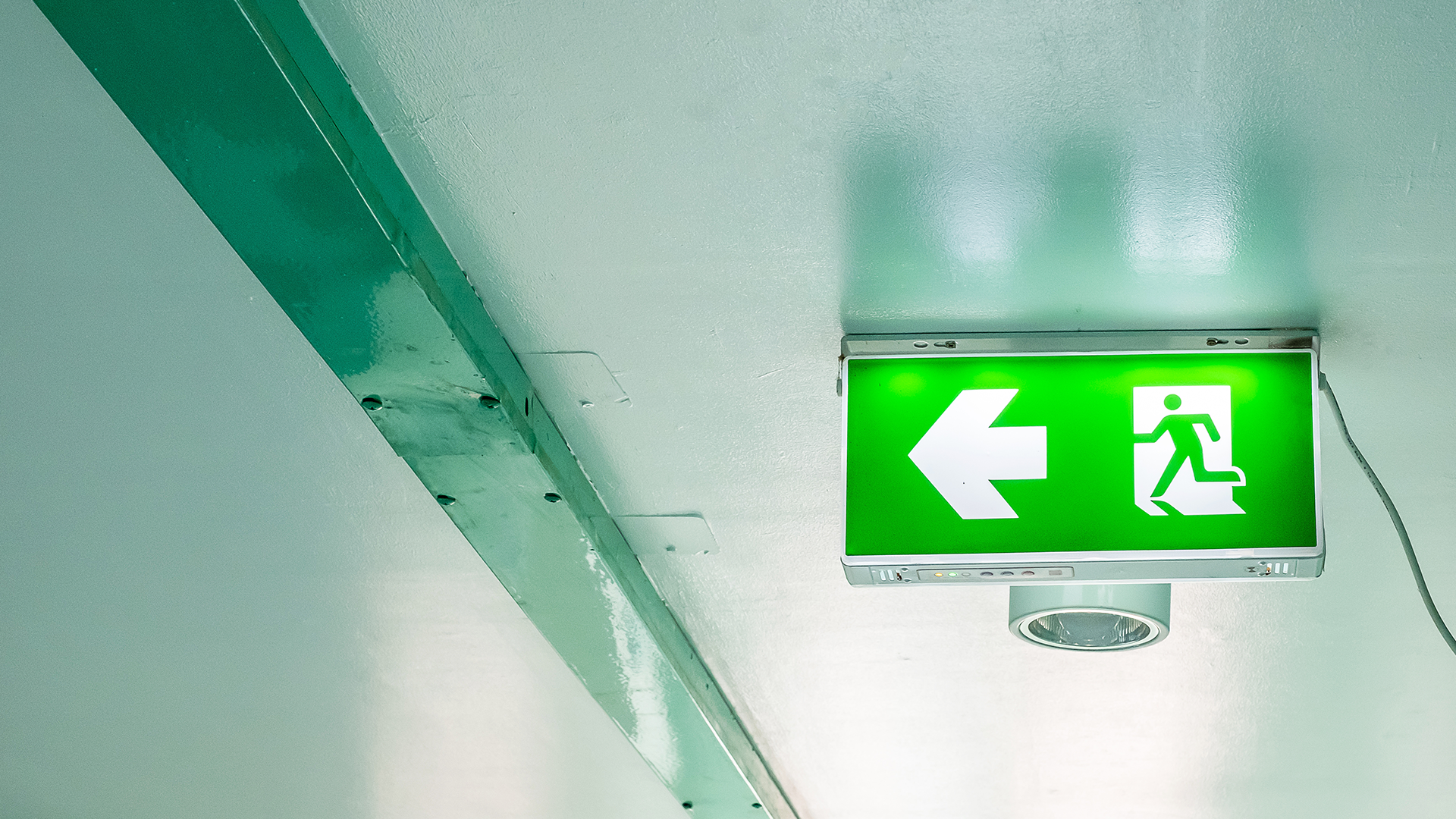
Exit signs and emergency lights clearly indicate escape routes and final exits. These must remain visible even during power loss and be positioned so occupants can move safely towards exits without confusion.
Escape Route Lighting and Open Area (Anti-Panic) Illumination
Escape route lighting ensures corridors, stairways, and exit paths remain illuminated. Open area or anti-panic lighting prevents sudden darkness in larger spaces, allowing occupants to orient themselves and move safely toward exits.
High-Risk Task Area Lighting for Industrial Environments
In areas where machinery or hazardous processes are present, emergency lighting must provide sufficient illumination to allow safe shutdown procedures. This reduces the risk of injury during emergency situations.
Central Battery Systems vs. Self-Contained Luminaires
Emergency lighting systems may operate using self-contained fittings with individual batteries or via central battery systems supplying multiple luminaires.
Self-contained systems are often suitable for smaller premises due to lower installation costs, while central battery systems are commonly used in larger or complex buildings where maintenance and monitoring can be centralised.
Professional Design and Installation Process
Correct emergency lighting performance begins with proper design and positioning. Poorly installed systems can leave areas in darkness or fail to meet compliance requirements.
Site-Specific Risk Assessments for Tailored Protection
We conduct detailed site assessments to determine lighting requirements based on occupancy levels, building layout, and evacuation strategy. This ensures illumination levels and system duration meet both legal and practical requirements.
Positioning Luminaires: Stairways, Changes in Floor Level, and Fire Points
BS 5266-1 requires emergency lighting to be positioned at key risk points, including:
-
Stairways and changes in level
-
Direction changes along escape routes
-
Fire alarm call points and firefighting equipment
-
Exit doors and external escape routes
Correct positioning ensures occupants can move safely even in unfamiliar or smoke-affected environments.
Integration with Fire Detection and Security Systems
Emergency lighting systems can be integrated with fire detection and wider security infrastructure to provide a coordinated safety response. This integration supports safer evacuation and simplified system management.
Essential Emergency Lighting Maintenance and Testing
Emergency lighting systems must be regularly tested to ensure they function correctly when required. Emergency lighting maintenance is not only best practice – it is a legal requirement.
Daily Visual Checks of Central Power Indicators
Where central systems are installed, daily visual checks ensure indicators show the system is operational and charging correctly.
Monthly Functional “Flick” Testing
Monthly testing involves briefly simulating a power failure to confirm that emergency lights illuminate correctly. This verifies system readiness without fully discharging batteries.
Annual Full-Duration Discharge Testing
An annual full-duration test confirms the system can operate for its designed duration, typically three hours. This test verifies battery capacity and overall system performance.
Keeping an Accurate Fire Safety Logbook for Compliance
All testing and maintenance must be recorded in a fire safety logbook. Accurate records demonstrate compliance during inspections and support ongoing safety management.
At Brunel, we provide planned maintenance programmes that remove the administrative burden from responsible persons while ensuring compliance is maintained.
Why Choose Brunel Security for Your Fire Safety Needs?
Decades of Experience in Sensitive and Complex Sectors
With over 30 years of experience, Brunel Security understands the practical challenges faced by facilities managers and building owners across industrial, healthcare, education, and commercial environments.
NSI Gold-Standard Accreditation and Certified Expertise
Our NSI Gold accreditation reflects adherence to the highest industry standards, ensuring emergency lighting systems are designed, installed, and maintained to recognised best practice.
Nationwide Reach with a Personal, Specialist Focus
We combine nationwide capability with a responsive, specialist approach. Every system is designed around your building’s specific requirements, ensuring practical compliance without unnecessary complexity.
FAQ’s
Most UK commercial systems are designed to provide illumination for a minimum of 3 hours following a power failure, allowing for safe evacuation and re-entry if the building is not immediately cleared.
- Yes, under the Regulatory Reform (Fire Safety) Order 2005, almost all non-domestic premises must have adequate emergency lighting to ensure the safety of occupants during a power loss.
Yes, if installed as a ‘maintained’ or ‘switchable’ fitting, the luminaire functions like a standard light but remains lit via battery backup if the mains power fails.
An exit sign specifically identifies the escape route and remains illuminated, while emergency lights provide general illumination to the floor and surroundings to prevent panic and show hazards.
Typically, emergency lighting batteries last between 3 and 10 years, depending on the type (NiCd, NiMH, or Lithium) and the frequency of testing.